For foreign investors earning rental income in the United States, the ITIN process is not simply about filling out a form. If not properly structured, the net return on the investment may decrease, withholding taxes may increase, and tax non-compliance risks may arise.
This guide explains the ITIN application process, how Form W-7 is completed, the strategy behind Form W-8ECI, and how proper tax planning protects long-term returns — all in accordance with IRS regulations.
An ITIN is required if you earn rental income in the U.S., report U.S.-source income, receive income through an LLC, or file a federal tax return. In real estate investing, the ITIN process should be planned as soon as rental income begins.
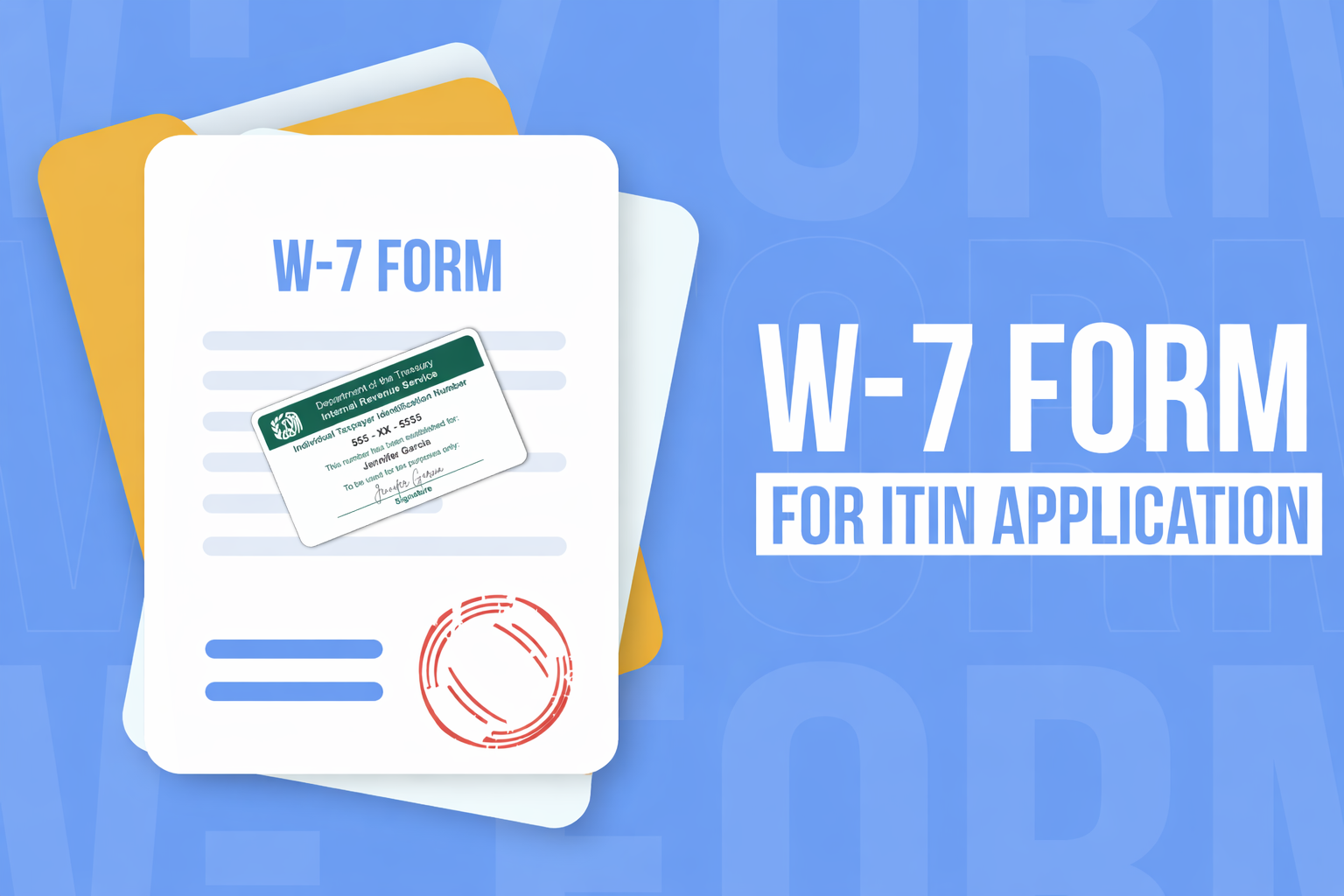
Form W-7 is the core document used to apply for an ITIN. It includes selecting the correct application category, declaring identification details, and stating the U.S. income and tax purpose. Choosing the correct category is critical, as an incorrect selection may lead to rejection. Most real estate investors apply as nonresident individuals required to report U.S. income.
Under the standard procedure, the IRS requires submission of the original passport, which can result in delays and international shipping risks. The Certified Acceptance Agent (CAA) system removes this risk by verifying identity locally and submitting an official certification to the IRS. This makes the process more secure and efficient.
The average ITIN processing time is 6 to 10 weeks. A properly prepared application prevents rejection and avoids restarting the process, which can cause significant delays.
After obtaining an ITIN, submitting Form W-8ECI becomes strategically important. Without it, rental income may be subject to a default 30% gross withholding. With W-8ECI in place, income is taxed on a net basis, allowing expense deductions and significantly improving overall tax efficiency.
Net taxable income is calculated after deducting property taxes, insurance, maintenance, management fees, and depreciation. Depreciation is especially powerful because it reduces taxable income on paper without requiring additional cash outflow.
For example, if annual rental income is 20,000 USD, operating expenses are 7,000 USD, and depreciation is 4,000 USD, taxable income is reduced to 9,000 USD. Without proper structuring, taxation on gross income could substantially reduce net profitability.
An ITIN is therefore not just a tax identification number; it is a financial efficiency tool. When combined with proper tax planning, it maximizes return, preserves cash flow, and supports long-term sustainability.
The most common mistakes include delaying the ITIN process, failing to submit W-8ECI, neglecting expense documentation, and missing depreciation benefits. Each of these directly impacts net return.
Through Vasta’s IRS-authorized CAA infrastructure, identity verification, W-7 preparation, ITIN submission, W-8ECI planning, and annual tax coordination are structured within a compliant framework.
Investing in the United States is not only about acquiring property — it is about building the correct tax foundation. A properly planned ITIN strategy is one of the most important pillars of a successful investment.